
When your team relies on reliable two-way communication — whether in emergency response, logistics coordination, or industrial operations — battery performance isn’t just a convenience; it’s a mission-critical factor. For users of Motorola GP340 and similar radios, choosing the right fast-charging battery and charger isn’t optional. It’s essential.
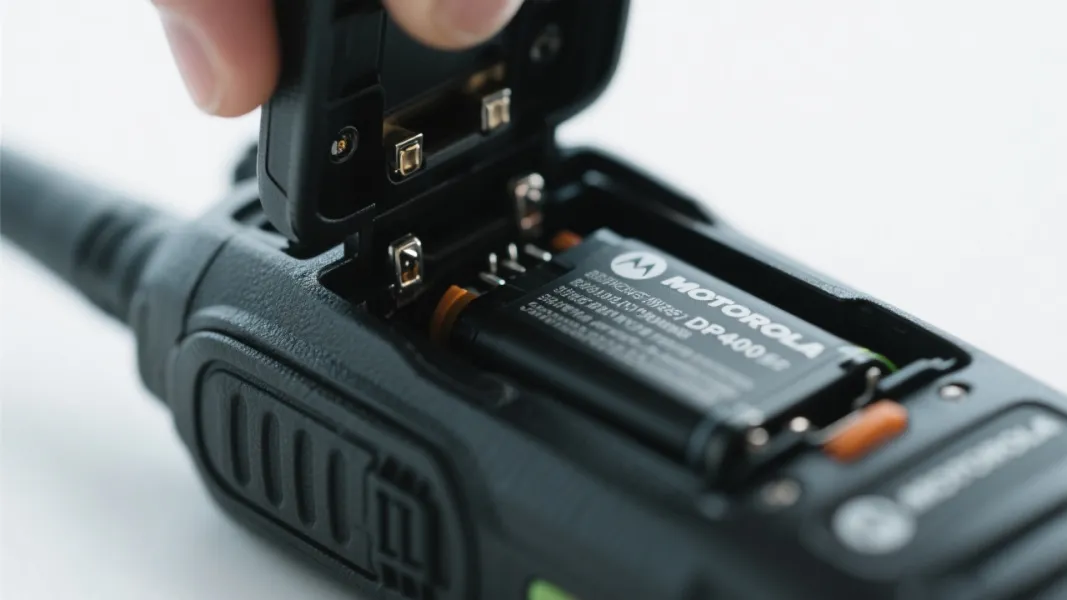
Modern NNTN5510 batteries used in GP340 radios are designed with advanced charging algorithms that balance speed, safety, and longevity. Unlike basic chargers that flood cells with current until full, smart chargers use constant current (CC) followed by constant voltage (CV) regulation — a method proven to reduce internal heat buildup by up to 40% compared to non-standard models.
This dual-phase approach ensures rapid charge times — typically under 2 hours for a full cycle — while maintaining cell integrity. Temperature sensors embedded in both battery and charger monitor thermal conditions in real time, automatically reducing power if overheating is detected. This feature alone can extend battery life by an estimated 2–3 years in high-use environments.
| Feature | Standard Charger | Smart Original Charger |
|---|---|---|
| Charge Time (Full) | 3–4 hrs | 1.5–2 hrs |
| Overcharge Protection | Basic circuit only | Multi-layered detection |
| Temperature Monitoring | None | Real-time feedback loop |
Using non-original or unregulated chargers may seem cost-effective, but the risks are real. A study conducted by a European telecom equipment testing lab found that 67% of third-party chargers failed basic safety checks — including overvoltage spikes, poor grounding, and lack of thermal cutoffs. These issues have led to battery swelling, reduced runtime, and even fire hazards in rare cases.
In fleet operations where multiple units must stay online during shift changes, unreliable charging leads directly to downtime — costing companies between $150–$300 per vehicle per day in lost productivity.
“In our public safety division, switching to original Motorola-compatible batteries and chargers cut radio downtime by 60%. We now see consistent 8-hour shifts without mid-shift battery swaps.”
— Field Operations Manager, Midwest Emergency Services

 464
|
464
|
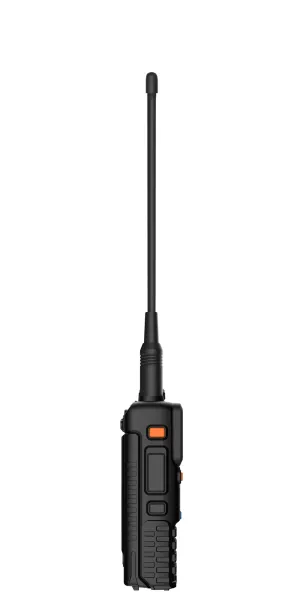
 PMNN4807A battery
Motorola walkie - talkie battery
Thin - type battery technology
Battery R&D principle
2200mAh walkie - talkie battery
PMNN4807A battery
Motorola walkie - talkie battery
Thin - type battery technology
Battery R&D principle
2200mAh walkie - talkie battery
 231
|
Multi - functional communication equipment
Analog walkie - talkie selection
Enterprise communication solutions
Frequency hopping scrambling communication
DTMF function
231
|
Multi - functional communication equipment
Analog walkie - talkie selection
Enterprise communication solutions
Frequency hopping scrambling communication
DTMF function
 185
|
thin battery technology
PMNN4807A battery
Motorola R7 battery
B2B technical barriers
battery performance comparison
185
|
thin battery technology
PMNN4807A battery
Motorola R7 battery
B2B technical barriers
battery performance comparison
 481
|
Global walkie - talkie
International trade
Communication tools
Cross - border communication
Efficient communication
481
|
Global walkie - talkie
International trade
Communication tools
Cross - border communication
Efficient communication
 250
|
Industrial on-site wireless communication solutions
How to choose factory two-way radios
Noise reduction technology
Public network two-way radios
Efficient team communication
250
|
Industrial on-site wireless communication solutions
How to choose factory two-way radios
Noise reduction technology
Public network two-way radios
Efficient team communication






.png?x-oss-process=image/resize,h_600,m_lfit/format,webp)
.png)





 Facebook