In today's industrial environments, high levels of ambient noise pose significant challenges to effective communication. Intelligent Noise Cancellation (INC) technology, driven by advanced signal processing and microphone array design, offers a transformative solution to these hurdles. This article delves deep into the critical technical principles underpinning intelligent noise cancellation in industrial communication systems, emphasizing its real-world applications and operational advantages.
The first stage in intelligent noise cancellation involves precise sound signal acquisition. Utilizing multiple microphones arranged in strategic array formations allows systems to capture audio inputs with spatial resolution. Such configurations enhance the differentiation of speech signals from ambient noise sources, even within acoustically hostile environments. Signal separation is then achieved through algorithms that analyze temporal and spectral characteristics of the audio input, isolating noise components while preserving voice clarity.
Noise identification algorithms classify background sounds based on frequency patterns and amplitude modulation. For example, industrial noises such as machinery hum or compressor drones often show consistent spectral signatures distinguishable from human speech. By applying adaptive filtering techniques, systems dynamically adjust to changing noise profiles, ensuring continuous optimization in communication clarity.
Multi-microphone arrays are fundamental to intelligent noise cancellation, leveraging spatial diversity to improve signal-to-noise ratio (SNR). Commonly employed configurations include linear, circular, and planar arrays, each with trade-offs between directional sensitivity and physical implementation complexity. For instance, a 4-microphone planar array can achieve an SNR improvement of up to 15 dB in challenging noise environments, significantly outperforming single-microphone setups.
Beamforming algorithms guide the microphone array to focus on the desired speech source by electronically steering the “listening beam” toward the speaker's location. This spatial filtering suppresses off-axis noise and reverberations, leading to improved intelligibility in industrial communication devices.
To maintain communication quality in variable noise conditions, real-time signal processing algorithms continuously monitor audio inputs and dynamically adjust filtering parameters. Techniques such as spectral subtraction, Wiener filtering, and deep learning-based denoising models operate in milliseconds, ensuring minimal communication latency.
Additionally, intelligent noise cancellation systems incorporate environmental adaptability features. These systems calibrate their algorithms based on detected ambient parameters, such as noise spectrum shifts or sudden transient sounds, enabling robust performance across diverse industrial sites—from automotive manufacturing plants to chemical processing facilities.
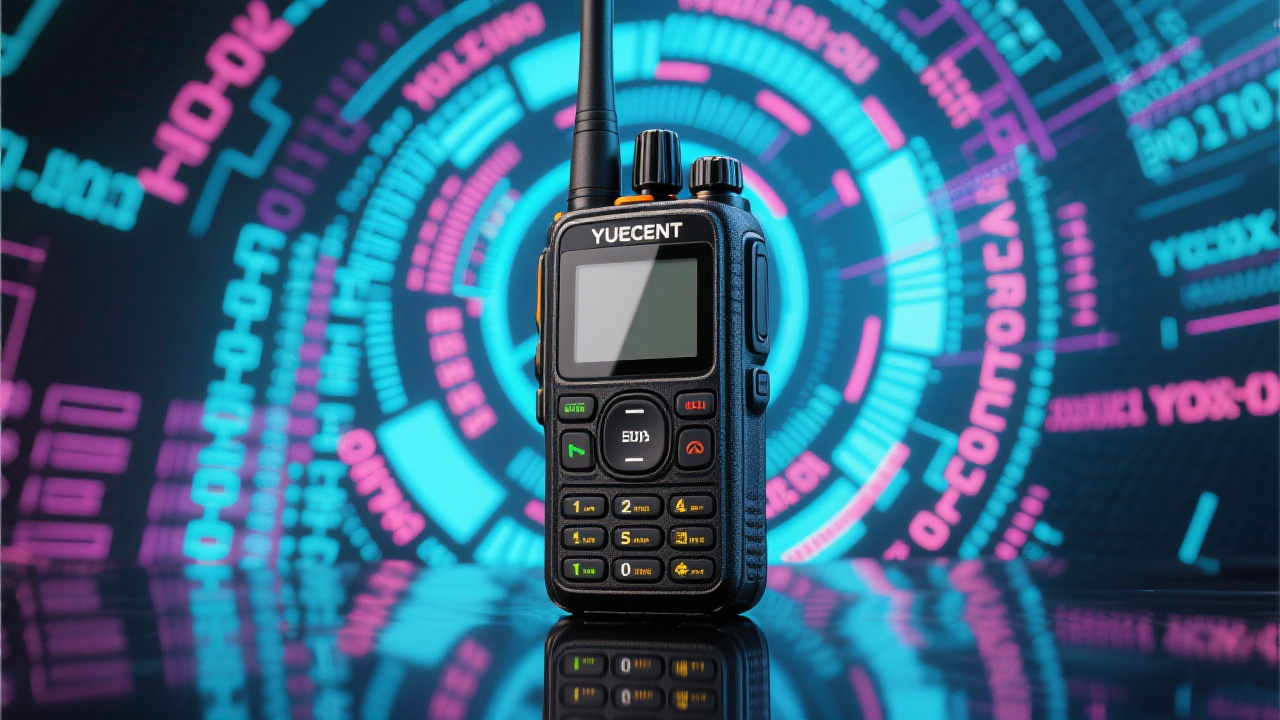
A recent deployment in a metal fabrication plant demonstrated that upgrading to a 6-microphone intelligent noise cancellation system reduced communication error rates by over 40%. The solution merged spatial filtering with adaptive spectral processing, allowing on-site teams to maintain clear audio links despite continuous operation of heavy machinery.
Similarly, in an oil refinery context characterized by sudden pressure valve blasts and persistent ambient noise above 85 dB SPL, customized INC configurations integrated environmental sensors that dynamically tuned the denoising algorithms. This approach yielded a 30% increase in message comprehension accuracy and improved safety communication compliance.

Selecting optimal noise cancellation equipment requires balancing microphone array complexity, processing capabilities, and environmental constraints. Devices featuring at least 4 microphones with DSP-powered adaptive algorithms are recommended for environments where noise levels routinely exceed 80 dB SPL. Furthermore, prioritizing hardware with programmable filters and environmental sensing modules ensures long-term adaptability.
Integrators should consider modular systems allowing firmware upgrades to incorporate evolving denoising techniques such as AI-driven noise profiling, ensuring communication infrastructure remains future-proof.
| Key Feature | Recommended Specification | Benefits |
|---|---|---|
| Microphone Array | 4 to 6 microphones, planar or circular | Enhanced spatial filtering and noise suppression |
| Processors | DSP with AI capabilities, low latency | Real-time adaptive processing, future-proof |
| Environmental Sensors | Acoustic and vibration sensors | Automatic noise profile adjustment |
Discover cutting-edge noise cancellation solutions designed to conquer the toughest industrial environments. Enhance communication clarity, maximize operational safety, and boost team efficiency with our high-performance devices. Explore our premium communication equipment now.






.png?x-oss-process=image/resize,h_600,m_lfit/format,webp)
.png)


.png?x-oss-process=image/resize,h_600,m_lfit/format,webp)


 Facebook