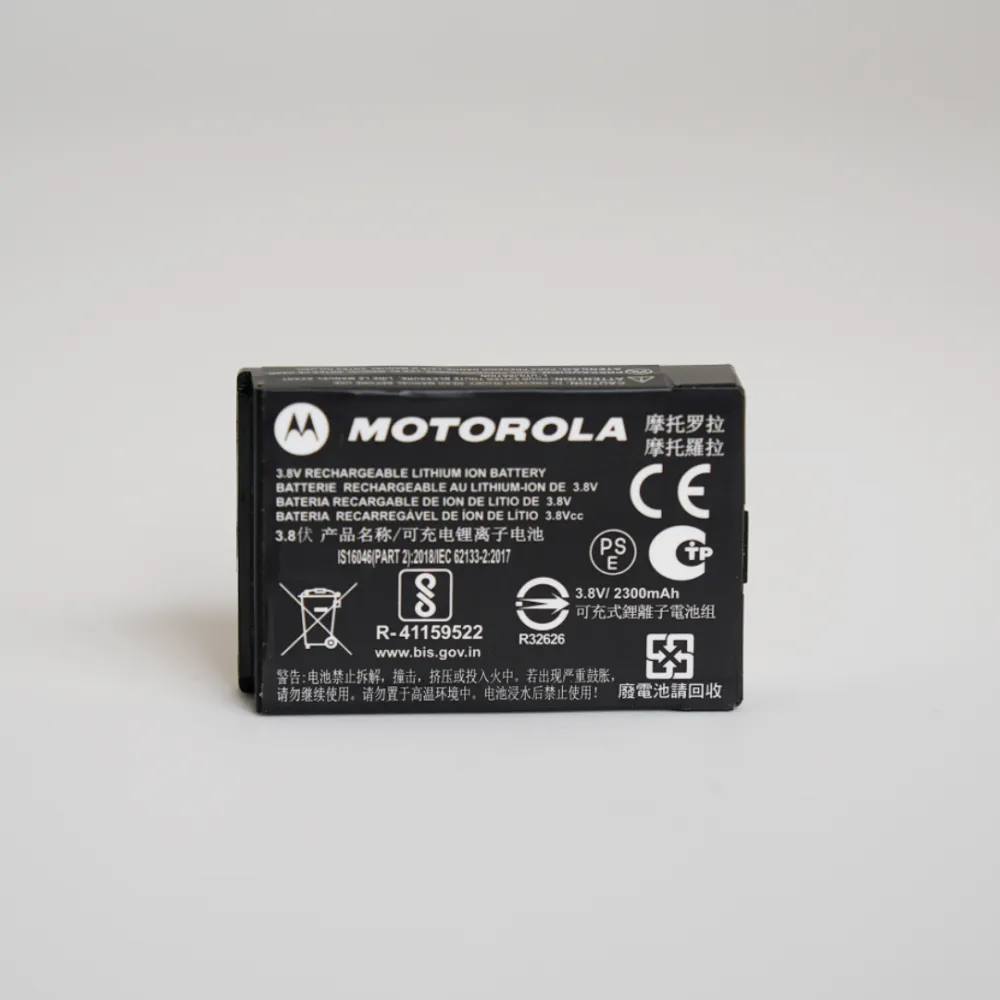
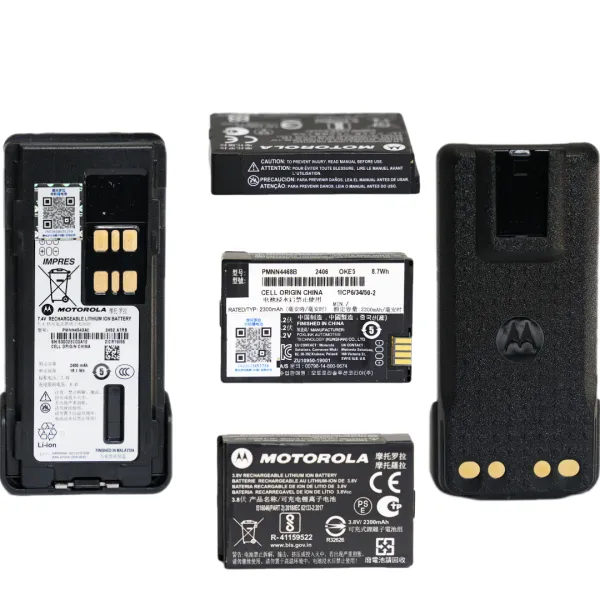
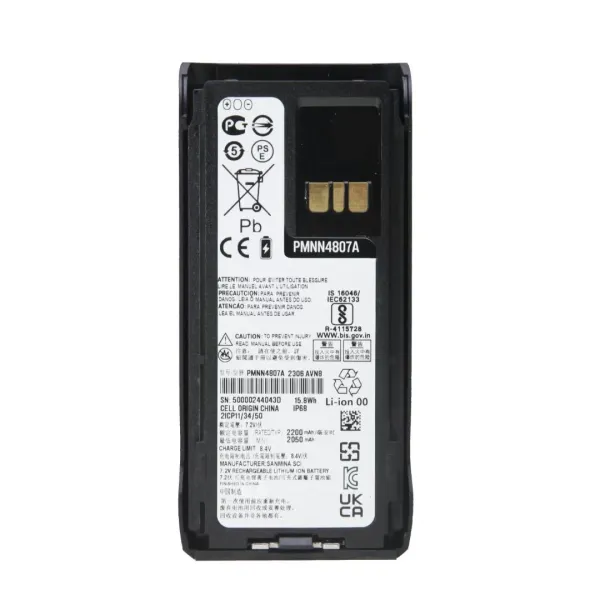
In the realm of B2B battery procurement, understanding the technical principles behind products is crucial for making informed decisions. This article delves deep into the core technology of the PMNN4807A thin battery, specifically designed for the Motorola R7 two - way radio (2200mAh), aiming to enhance your technical decision - making ability and procurement trust.
The journey of developing the PMNN4807A battery was fraught with challenges. One of the most significant was the conflict between thinness and high capacity. Engineers spent countless hours in the lab, testing various materials and designs. They experimented with over 50 different types of electrode materials before finally settling on a unique combination that could achieve both thinness and high energy storage. For example, they found a way to use a new type of lithium - ion compound that increased the energy density while reducing the thickness of the battery.
The choice of cell materials is the foundation of the PMNN4807A battery's performance. The battery uses a high - quality lithium - cobalt - oxide cathode material. This material offers a high theoretical specific capacity, which means it can store more energy in a given volume. Compared to some common lithium - iron - phosphate cathodes used in other batteries, it has a 20% higher energy density, allowing the PMNN4807A to achieve a 2200mAh capacity in a thin form factor.
The structural design of the PMNN4807A is another area of innovation. It features a multi - layer, stacked structure. This design not only maximizes the use of internal space but also improves the battery's mechanical stability. The layers are carefully arranged to ensure uniform current distribution, which is crucial for stable performance. In a test, the PMNN4807A battery maintained a voltage fluctuation of less than 5% during continuous discharge, far superior to some of its competitors.
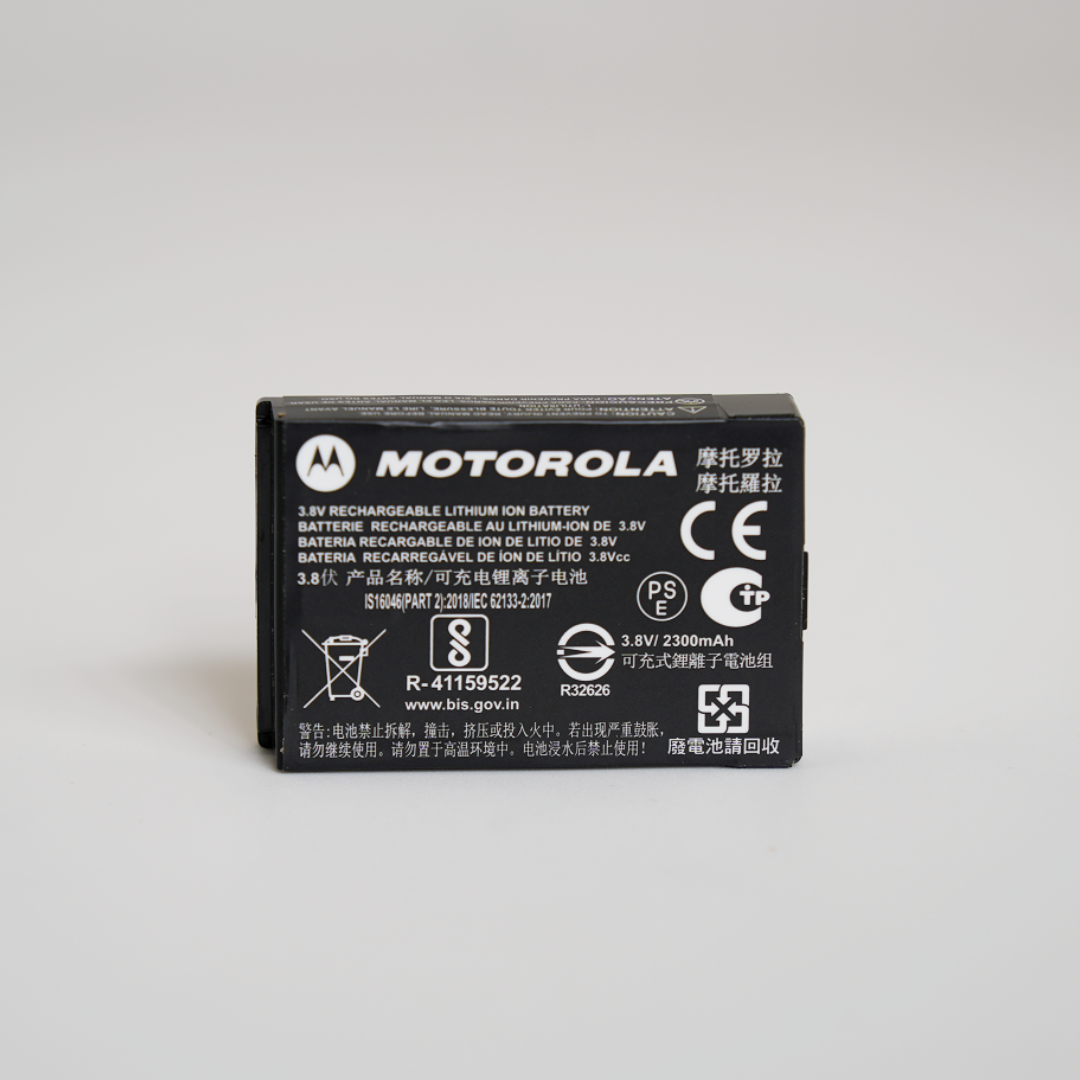
To optimize energy density, the development team used a combination of advanced manufacturing processes and material engineering. They reduced the thickness of the separator between the anode and cathode, which increased the active material ratio inside the battery. As a result, the energy density of the PMNN4807A battery reaches 600Wh/L, significantly higher than the industry average of 500Wh/L for similar thin batteries.
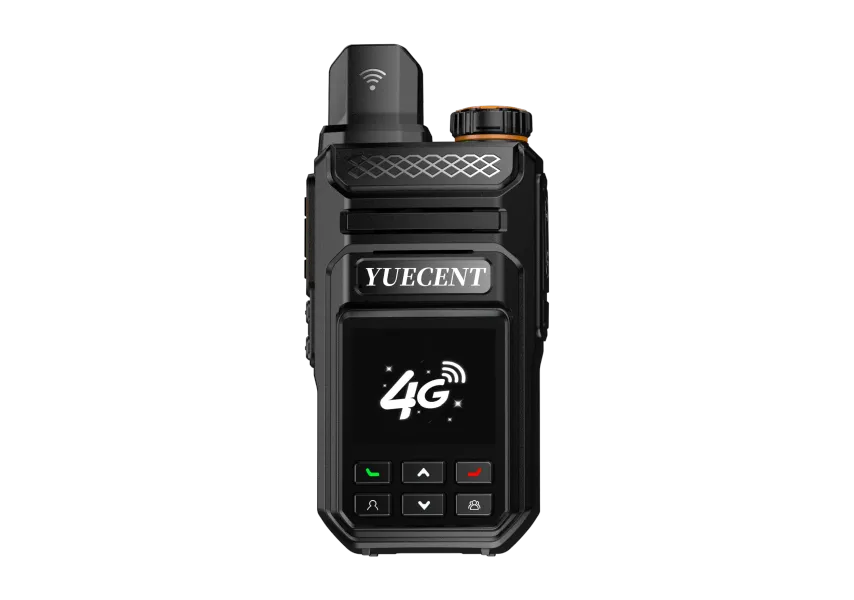
The PMNN4807A battery is perfectly compatible with the Motorola R7 two - way radio. It has a unique charging and discharging control system that can adapt to the power requirements of the R7. For example, when the R7 is in high - power transmission mode, the battery can quickly supply the necessary current without overheating. In a real - world scenario, a field - service team using Motorola R7 radios with PMNN4807A batteries reported that they could operate continuously for up to 10 hours on a single charge, which is 2 hours longer than with some other batteries.
When compared to similar products in the market, the PMNN4807A battery stands out in terms of volume control and discharge stability. Many competing batteries either sacrifice capacity for thinness or have poor discharge performance. In a side - by - side test, the PMNN4807A maintained a stable output voltage throughout the discharge process, while some competitors' voltages dropped significantly after 50% of the capacity was used. Also, the PMNN4807A is 15% thinner than the average thin battery with the same capacity, making it a perfect fit for the sleek design of the Motorola R7.
By providing detailed technical information about the PMNN4807A battery, we aim to enhance customer confidence. When customers understand the technology behind the product, they can make more informed purchasing decisions. For example, a B2B buyer who understands the energy density and discharge stability of the PMNN4807A is more likely to trust its performance and place a large - scale order. Technical transparency also helps customers avoid being misled by just looking at the surface parameters. They can truly understand the value of the product and make a choice based on real - world performance.
When B2B buyers take the time to understand the technology behind a product, they can quickly identify the products that best meet their needs. Instead of spending hours comparing different products based on vague specifications, they can focus on the key technical indicators. For example, if a buyer knows that energy density is crucial for their application, they can quickly determine that the PMNN4807A is a better choice than other batteries with lower energy density. This way, they can save time and make more efficient procurement decisions.
Let every purchase be based on real - world technical knowledge. No longer be confused by parameters. Choose the battery that truly understands your needs. Understanding the technology behind the PMNN4807A battery means making a more informed and efficient procurement decision. If you want to learn more about how this battery can enhance your business operations, click here.






.png?x-oss-process=image/resize,h_600,m_lfit/format,webp)
.png)


.png?x-oss-process=image/resize,h_600,m_lfit/format,webp)

 Facebook